

German Genealogy Research: Overcoming Challenges with Historical Records and Archives
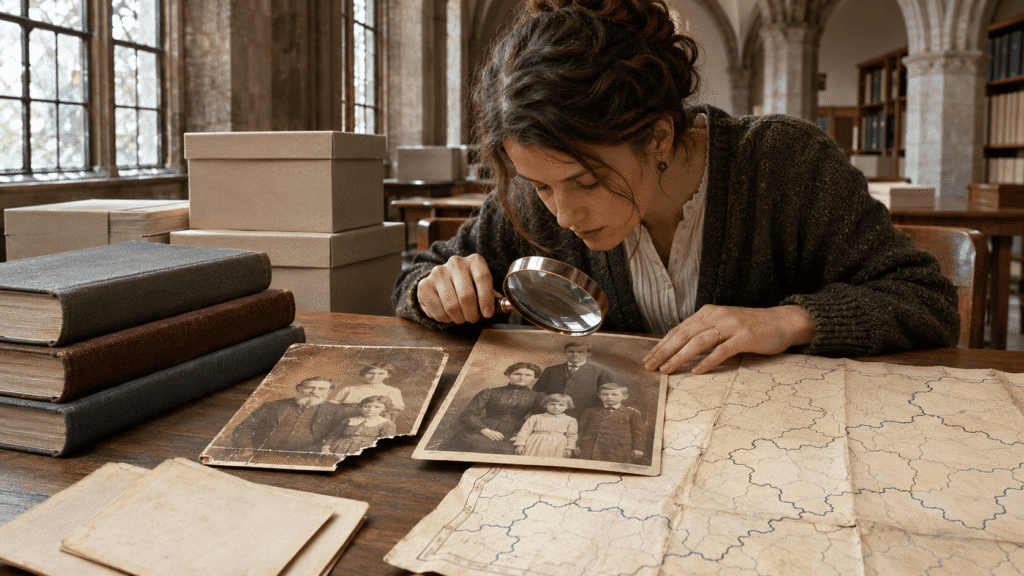
German genealogy research can feel like a puzzle with pieces missing. I have spent time reading about how family historians approach German roots, and the same problems keep coming up. Records are scattered, handwriting is hard to read and borders on the map have changed many times over the last two centuries. This guide looks at how historical records and archives shape German family research and where people most often get stuck.
We at N Search write about technology and the tools that change how people work with information. Digital archives and searchable databases have made old records easier to reach than they were a generation ago. Even so, technology alone has not solved every problem for me. Knowing where records sit still matters a great deal, and no search box can tell you that on its own.
Most German family research runs into the same handful of obstacles. I have grouped the workarounds by challenge, starting with reading old registers and ending with deciding when outside help makes sense. Each part can stand on its own, so you can return to whichever section fits the problem in front of you. Reading the first two sections before opening any archive website is a good idea.
Why German Family Records Are Harder to Trace
Many people start with a simple goal. They want to find a great grandparent born somewhere in Germany, then follow that line backward one generation at a time. Within a few steps the trail often goes quiet. A town name may appear in one record and vanish from the next, and that is usually where frustration sets in.
For most of its history, Germany was made up of separate states. Before unification in 1871, the land was split into kingdoms, duchies and free cities. Each region kept its own record keeping rules, so one search method rarely works everywhere. From my experience, a researcher must first learn which state governed a village in a given year before any search makes sense.
Language adds another layer. Records were written in German, Latin and sometimes local dialects. Clerks used abbreviations that were common at the time but are unfamiliar today, so a name may be spelled several ways in the same parish book. When a surname looks wrong, my first assumption now is that the spelling reflects the clerk’s habit, not that I have the wrong family.
The best first step is to write down every place name and date you already know. Include spelling variations and nearby towns, since the nearby village is often where the record sits. This list becomes your map for the rest of the research. Each new record can be checked against it, which makes gaps much easier to spot.
Church Books and Civil Registration Before and After 1876
Church registers are often the oldest source for German families. Parish priests and pastors recorded baptisms, marriages and burials in bound books. For many Protestant and Catholic communities, these entries reach back into the 1600s and 1700s. I usually check these books first, because they can name relatives long before civil offices began keeping records.
Civil registration changed the picture. The German Empire introduced standardized civil records in 1876, and those offices issued birth, marriage and death certificates. Civil records from this era often list parents, occupations and witnesses, which can help confirm a family link. When a certificate names a mother and father, I treat it as a strong lead to test against the church entries.
If you want a structured overview of this step, an article on german genealogists for hire is worth a look. The page describes how to think about hiring help for German tracing, so it can be a helpful, beginner friendly starting point. Reading it before you ask an archive or a researcher what to do next may help.
Some areas kept church books alongside civil files, so both sources should be checked. Asking the local archive which set holds the earliest entries is my first question, because it sets the order for everything that follows. That step saves time and avoids repeated searches. Many families moved between parishes, so a missing entry may sit in a neighboring register.
Reading Old German Handwriting and Script
Handwriting is often the hardest barrier in German research. Many records use Kurrent, a cursive style that looks very different from modern print. Clerks wrote quickly and ink faded over time, so even native speakers can struggle. One difficult page can take far longer to read than a whole index entry.
Sütterlin was a newer handwriting style taught in German schools for much of the early twentieth century. It was phased out in 1941, which means letters written by people who learned it can still look unfamiliar today. Many older relatives may have written in this script, so I check for it whenever a letter looks strange. A strange looking letter is not necessarily damaged.
Alphabet charts are a simple and free way to learn letter shapes, so that is where I would start. Practice with a sample page and compare each letter to the chart until common words begin to read easily. Transcription software and handwriting recognition tools can speed up the work, though they still make mistakes. As a site focused on technology, we have seen these tools improve over time, but I still check every machine reading against the original image. Uncertain letters go into a separate notes file so I can revisit them later.
Dealing With Border Changes and Lost Records
Borders in Central and Eastern Europe moved many times. Places in Silesia, East Prussia and Pomerania now sit in Poland or Russia, and their German names changed too. A record may exist, but the town name you know may not appear on modern maps. I keep a list of both the old and new names so I can search under each one.
World War II and later conflicts destroyed or damaged many archives. Some city offices lost records in bombing raids, while others were moved or split between states. Because of this, a gap in the files does not always mean a family did not live there. I treat a gap as a question about where the paperwork went.
Start with a historical gazetteer that lists old and new place names. Gazetteers often include dates when a place changed hands, which helps you pick the right time period. Look at which district or county office once managed the parish. Records from that office may now be held by a regional state archive, so I check that archive’s catalogue before giving up.
Neighboring parishes sometimes kept copies of records. When an original book is missing, a duplicate or transcript may survive elsewhere. Ask archives about these options before you assume the trail has ended. I write down each archive I contacted and the answer I received, so I never repeat a request by accident.
Using Historical Records, Archives and Privacy Rules
Archives hold most of the material that serious German research depends on. Municipal archives, church archives and state archives each keep different records. Knowing which one to contact can save months of waiting. Each archive also has its own opening hours and request process, so I read its rules before sending anything.
Many registers are now digitized and placed on public platforms. Online indexes let you search by surname and place before you request a copy. Some indexes are free and others charge a subscription. Coverage is still uneven from one region to another, so I treat an index as a starting point and check it against the original.
Privacy Rules and Access Periods
German civil registration law limits access to recent records. Birth records are generally closed for a long period, and marriage and death records have their own waiting windows. The exact timing depends on the record type and the rules of the local office. Confirming the current rule with the office before planning a trip or paying a fee saves frustration.
When a record is restricted, you may need proof of kinship to request a copy. Prepare simple documents such as birth certificates for each generation. Clear proof speeds up the process and cuts down on back and forth requests. I keep copies of these papers in the same folder as my research notes so they are ready when I need them.
Working With Professionals and Keeping Research Organized
Some families reach a point where research becomes too slow or too complicated. A professional researcher can read local archives, speak the language and follow leads that are hard to reach from abroad. Whether hiring help makes sense depends on how much time and money you have to spend. Those two factors matter most when weighing the decision.
Before reaching out to anyone, prepare a short summary of what you already know. Include the names and dates you have, plus the records already checked. A clear summary helps a researcher start faster and can keep costs down. Ask early how they plan to report results, and whether they will send images or only written notes. I ask that before any work begins, and I follow the same simple routine for every project, listed below.
- Record each source with its archive, date and reference number
- Save a copy of every image or transcript you use
- Note any doubts in a separate file for later review
- Date each note so you can see when an idea first appeared
Consistent records make it easier to hand work to someone else or pick it up again later. They also help you explain your findings to relatives who may want proof. These notes act as the paper trail for my own work, so I am not relying on memory. That habit becomes more useful the longer a project runs.
Taking the Next Step in German Genealogy Research
German genealogy research takes patience and careful reading. The main obstacles come from shifting borders, changing record types, difficult handwriting and gaps caused by war. I have found that each problem can be worked through one source at a time, and that is the approach I recommend. Clear notes and a short list of places can take you further than any single search tool.
Start with the records you can reach today. Write down your known names, dates and places, then check the civil and church sources for each one. Use gazetteers to match old place names with modern regions, and learn a few common script styles before you open a register. Each step builds on the last one, so keep the order simple.
If the trail stalls, decide whether outside help would save you time. Think about the cost, the distance from the archives and how much of the reading you want to do yourself. Weighing each of those before making a choice keeps the decision grounded. Whatever path you take, you will feel more confident once your notes are complete.
We at N Search will keep sharing practical guides like this one. Bookmark this page, share it with a relative who is also tracing German roots, and take one small step today by listing the places your family lived. That list is where your next round of research begins.
 Design a Home Optimized for Both Living and Operating
 Family Law Explained
 Benefits of Pest Control Services
 Free Psychic Readings
 Christmas Spending
 Gold Jewelry Fashions
 German Genealogy Research: Overcoming Challenges with Historical Records and Archives